
Electric vs Springer Nerf Blasters
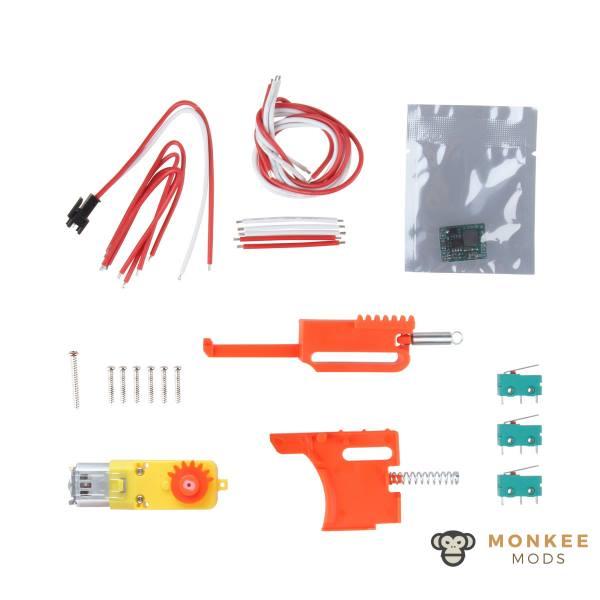
How Nerf works is almost always one of two machines: a springer that you prime by hand, or an electric flywheel that a battery keeps spinning. A third system — high-pressure air — exists, but it is a specialist setup with a tank and regulator, covered separately. For a first or second blaster in Malaysia, the live choice is electric versus springer, and the right answer depends on how you play, not which one “shoots harder” in a screenshot.
What a springer is doing
You pull a slide, grip or pump. That compresses a spring behind a plunger. The catch holds it. The trigger releases the catch, the plunger slams forward, and a pulse of air pushes the dart. Every shot costs you a prime. That sounds like a limitation until you notice what you gain: no pack to charge, no rev cue for the other team, a very repeatable pulse if the seal is healthy, and a jam you can usually clear without tools. Platforms such as the Worker Seagull, Worker Harrier and XYL KM9 Unicorn are all springers — different sizes, same idea.
The weak points are air leaks (O-rings, breech, plunger head), a catch that wears, and darts that no longer seal. A heavier spring raises the pulse, but only if the rest of the air path can take it. Over-springing a thin plunger or a plastic catch is the classic way to turn a reliable blaster into a paperweight. Hasbro’s own manuals say not to modify the blaster; aftermarket platforms document which springs they actually support. Stay inside that documentation.
What an electric flywheel is doing
Two motors spin a pair of wheels. A dart is fed into the pinch and thrown. Rate of fire is limited by the pusher and the magazine, not by your arm. You carry a charged pack, you wait a fraction of a second for the cage to come up to speed, and you accept a distinctive rev sound. A compact example in the current catalogue is the Hare Diana, a micro-flywheel pistol built around its own magazine rather than a spring prime.
Electric does not mean “always full-auto” and it does not mean “always more FPS”. A mild cage on a sagging pack will lose to a well-sealed springer at the same field cap. What electric wins on is volume: once the cage is spinning, follow-up shots are cheap. What it loses on is mixed ammo, neglected packs, and any day you forgot the charger. The cage itself is explained in what a flywheel blaster is.
Head-to-head for real games
| Question | Springer | Electric flywheel |
|---|---|---|
| Shots per minute, honestly | Your prime speed | Magazine and motors, much higher |
| Consistency shot to shot | High if the seal is healthy | Depends on pack voltage and wheel condition |
| Noise | A clack per shot | Rev plus shots — people hear you spool |
| Running cost | Darts | Darts plus packs, a charger, and eventual wheels |
| Humidity / storage in Malaysia | Foam and springs; keep it unprimed | Same, plus LiPo storage voltage and a fire bag |
| First upgrade that usually matters | Darts and air seal, then a documented spring | Matching darts/mags, then cage and wiring — not a random 3S pack |
| Sidearm / loaner | Excellent: hand to a friend with no briefing | Needs a charged pack and a dart format briefing |
Cost of ownership, not sticker price
A cheap electric that needs two spare magazines, a charger you do not own, and darts that only that mag format accepts is not cheaper than a springer plus a bag of common foam. Count the ecosystem. Half-length and full-length darts are different worlds — see half darts vs full-length darts before you commit. If your local group already runs one length, buy into that length. Switching later means magazines, a pusher, and sometimes the whole blaster.
Batteries are where electric buyers overspend. Use the pack and charger the product names. A higher cell count is not a free FPS upgrade; it is a different electrical system, and it can cook a stock trigger switch. If you do not want to learn LiPo habits (attended charge, storage voltage, swollen pack = stop), buy a springer. That is a legitimate choice, not a skill issue.
Which one should you actually buy
Buy a springer if you play mixed groups, lend blasters, want a quiet sidearm, or you are still deciding whether the hobby sticks. Buy electric if you play organised games that reward volume, you will keep packs charged, and you already know which dart length the field uses. Many people eventually carry both: a flywheel primary and a springer that still works when the pack dies. That loadout logic is in building your first Nerf loadout.
HPA sits above both for people who want a regulator and a tank. It is not a beginner fork. If you are curious, read the three-way comparison rather than converting a flywheel on a rumour.
Frequently Asked Questions
Is electric always higher FPS?
No. FPS is a chronograph reading of one dart on one setup. A strong springer with a tight seal often out-chronos a stock flywheel. Fields cap both. Tune to the organiser’s sheet, not to a forum number.
Can I convert a springer to electric later?
Not in any general sense. They are different machines. Some aftermarket bodies accept kits; most do not. Buy the propulsion you want, or own two blasters.
Do electric blasters need batteries every time?
Yes. No pack, no spin, no shot. Carry a charged spare if the game is long, and store packs at storage voltage between weekends. Details are in how to choose a LiPo.
Which is better for kids?
Follow the age mark on the exact product. Hasbro marks many blasters 8+ and some Pro models 14+ with “this is not a toy”. Electric adds pack safety. Everyone in the play area still needs rated eye protection. A simple springer is usually the less fussy loaner.