

Tamiya Mini 4WD Asia Challenge 2026: Manila, and the Route In
The Tamiya Mini 4WD Asia Challenge 2026 ran in Manila with 12 countries competing. What TMAC is, how the two classes differ, and how Malaysian racers qualify.
 Click to zoom
Out Of Stock
This product is currently unavailable.
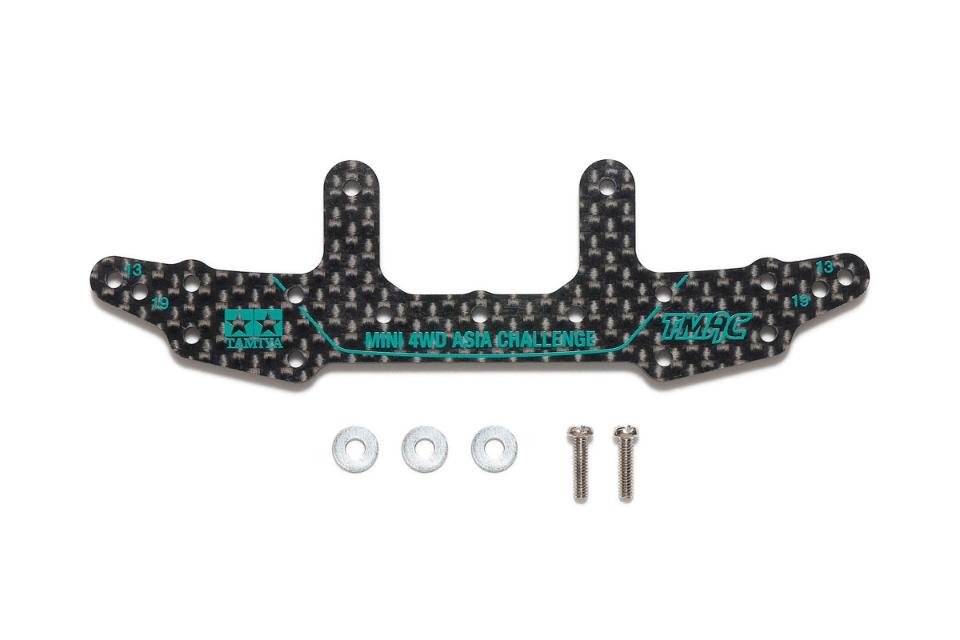
Browse available alternativesA 3mm-thick carbon-fiber-reinforced rear stay, used to mount rear rollers and other tuning parts at the back of a Mini 4WD chassis. This is a limited Tamiya Mini 4WD Asia Challenge edition, marked out from the standard version by green-printed logo graphics on the carbon plate. Carbon-fiber stays are stiffer than the resin stays supplied in kits, a common upgrade for racers looking to reduce flex at the rear of the chassis.
The Tamiya Mini 4WD Asia Challenge is a regional tournament series run across several Asian markets, and Tamiya periodically releases parts carrying its event branding rather than standard retail graphics — the green logo print here is what distinguishes this batch from the plain-carbon version of the same stay. At 3mm thick, it sits toward the stiffer, heavier end of Tamiya's carbon rear-stay lineup, much of which is otherwise sold at thinner gauges like 1.5mm for builders chasing lower weight over maximum rigidity. A stiffer rear stay keeps the rear roller geometry more consistent lap to lap, since it flexes less every time the car brushes a fence.
The Tamiya Mini 4WD Asia Challenge 2026 ran in Manila with 12 countries competing. What TMAC is, how the two classes differ, and how Malaysian racers qualify.

Mini 4WD brake sponge hardness and stay angle are two separate settings. Compare friction grade against mounting angle so the car slows safely and consistently.

Mini 4WD carbon stays and FRP plates solve different problems in B-MAX. Learn when to start with FRP, when carbon helps, and what to check first.