

Mini 4WD Setting Gear Set: AR (15456) vs FM-A (15516)
Tamiya 15456 and 15516 bundle five gear ratios, 3.5:1 to 5:1, but fit different chassis. Compare contents, price and fit before buying the wrong set.
 Click to zoom
In stock
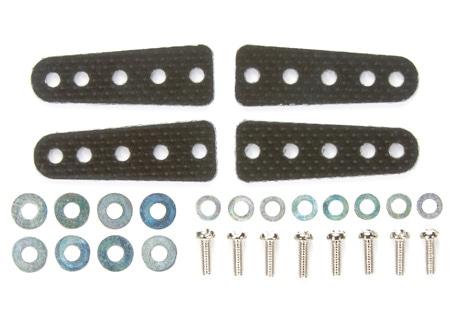
This short FRP reinforcing plate set is designed to brace the joints between the center unit and the front and rear units of the MS chassis. Bridging these connection points cuts down on chassis flex under cornering and jump loads, and helps keep roller stays holding a consistent angle instead of twisting out of alignment mid-race. Beyond the MS chassis, Tamiya lists the set as compatible with FM-A, Super XX, AR, MA, VZ, and ME chassis machines, reflecting how widely this center-to-end-unit joint design is shared across the current Mini 4WD range. Because chassis geometry differs slightly between these platforms, Tamiya notes that fitting the plates on some chassis may call for minor body clearance trimming. First released in July 2011 as Grade-Up Part No.431, it remains a common first upgrade for MS-based builds before moving on to more aggressive weight-saving reinforcements.
Tamiya 15456 and 15516 bundle five gear ratios, 3.5:1 to 5:1, but fit different chassis. Compare contents, price and fit before buying the wrong set.

Tamiya Mini 4WD began in 1982 and became a global hobby. See the milestone history, why the format endured and what collectors should verify.

Choose a Tamiya Mini 4WD gear set by the exact chassis, motor layout and instructions. Check ratio, gear cover and event rules before changing the drivetrain.