

Mini 4WD Setting Gear Set: AR (15456) vs FM-A (15516)
Tamiya 15456 and 15516 bundle five gear ratios, 3.5:1 to 5:1, but fit different chassis. Compare contents, price and fit before buying the wrong set.
 Click to zoom
In stock
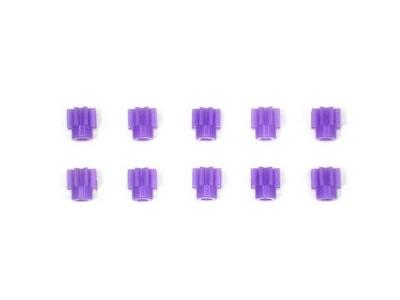
A pack of ten 8-tooth plastic pinion gears in purple, sized to mount on a Mini 4WD motor's output shaft and mesh with the chassis's counter gear. Sold as a maintenance item so worn or fatigued pinion gears can be replaced individually to keep the drivetrain running at its best.
Tamiya colour-codes its Mini 4WD pinion gears by tooth count so racers can tell them apart at a glance without counting teeth; purple identifies the 8-tooth size in that system, one of several pinion options used to change a car's gear ratio. A smaller-tooth-count pinion like this one gears the drivetrain down, trading top speed for stronger acceleration and better torque out of corners and up inclines — the opposite trade-off to fitting a larger pinion. Because the pinion is the first gear in the whole drivetrain, meshing directly with the motor shaft, it takes more wear than most other gears in the chassis, which is why Tamiya sells it in packs of ten rather than as a single spare.
Tamiya 15456 and 15516 bundle five gear ratios, 3.5:1 to 5:1, but fit different chassis. Compare contents, price and fit before buying the wrong set.

A Mini 4WD gear ratio chart from 3.5:1 to 5:1, explained by course type. Match your gear set to motor, straights and corners before race day.

Choose a Tamiya Mini 4WD gear set by the exact chassis, motor layout and instructions. Check ratio, gear cover and event rules before changing the drivetrain.