
Gel Blaster Barrel & Hop Upgrade Guide
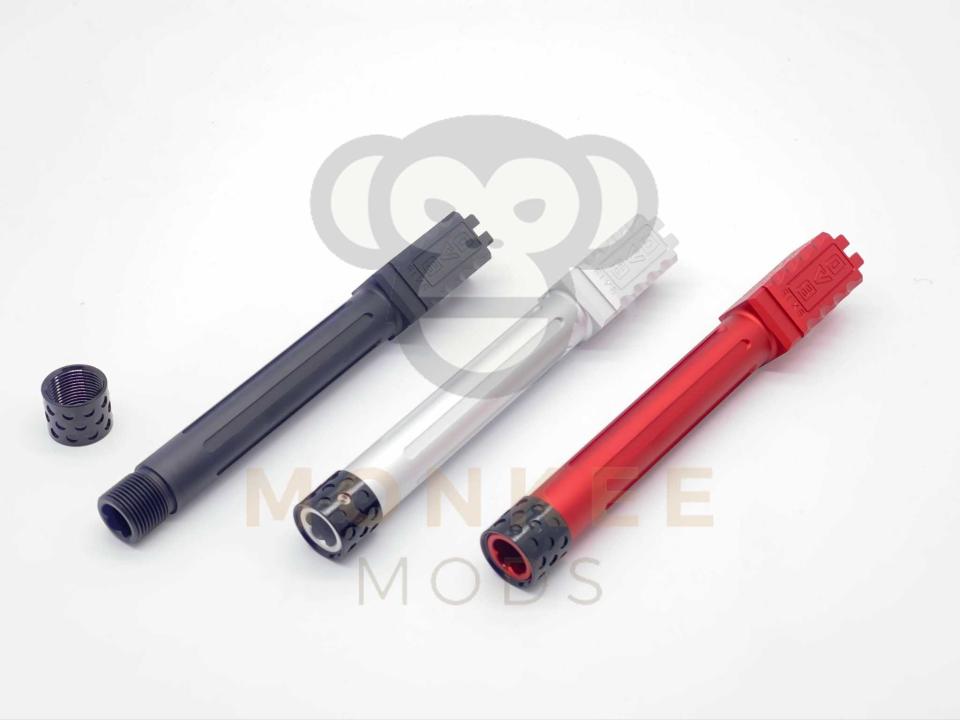
A well-planned gel blaster barrel upgrade is one of the cheapest, most noticeable ways to improve range, accuracy and shot-to-shot consistency — but only when the barrel, hop-up and your gel balls all work together. Swapping in a fancy barrel while ignoring the hop-up (or feeding it mismatched gels) usually does very little. This guide walks through what actually matters, in the order that matters, so you can spend your RM where it counts.
What the barrel and hop-up actually do
On a gel blaster, the inner barrel guides the gel ball as it accelerates, and the hop-up unit sits just before the barrel to put backspin on the ball. That backspin is what gives you a flatter, longer trajectory instead of a ball that drops off a metre past the muzzle. The two parts are a system: the barrel controls how cleanly the ball travels, and the hop-up controls how far and flat it flies.
Because gel balls are soft and water-swollen, they behave very differently from airsoft BBs. A barrel that is too tight will shave or burst gels; too loose and you lose consistency and air seal. This is why "tighter is always better" is a myth carried over from other hobbies.
Bore size: the honest trade-offs
Inner-barrel bore is usually described as tight-bore or wide-bore relative to the stock barrel. Here is the general picture — treat these as tendencies, not guarantees, because your gel size and hardness change everything.
| Bore type | Typical strengths | Watch-outs |
|---|---|---|
| Tight-bore | Better air seal, can improve consistency with well-matched, harder gels | More prone to shaving or bursting softer/larger gels; needs clean, well-soaked ammo |
| Stock / mid-bore | Forgiving, reliable feed, tolerates varied gel batches | Middle-of-the-road range and grouping |
| Wide-bore | Very reliable feeding, fewer jams, great for high rate-of-fire builds | Air seal can suffer; may trade a little consistency for reliability |
Rule of thumb for our climate: in humid Malaysian conditions where gels swell fast and can vary batch to batch, a slightly more forgiving bore paired with a good hop-up often out-shoots an aggressive tight-bore that chokes on inconsistent ammo.
Barrel length: longer isn't automatically better
Barrel length should roughly match your air volume (cylinder and spring on an AEG-style gearbox, or the system on a GBB). A barrel far longer than your setup can fill is under-volumed: it wastes energy and can hurt consistency. If you are running a shorter, high-ROF build, a shorter barrel is often the smarter call. When you start changing barrel length meaningfully, check that your gearbox parts and cylinder are matched to it, otherwise the numbers won't add up.
Hop-up: where the real range lives
If you only upgrade one thing, make it a properly tuned hop-up. Many stock units apply uneven or inconsistent hop. A better bucking/nub and careful adjustment will do more for your effective range than almost any barrel swap.
- Set it with the gels you actually use. Fire flat and level, then add hop until the ball flies straight and stops climbing. If it arcs upward, back off.
- Re-check often. Humidity and gel batch change hop behaviour — a setting that was perfect last weekend may need a nudge today.
- Don't over-hop. Too much backspin makes gels curve, burst early, or lob unpredictably.
You'll find inner barrels and T-hop parts listed for specific blaster models, so you can pick a combination known to work together, which saves a lot of trial and error compared to mixing random components.
Gel balls: the upgrade people forget
The best barrel in the world can't fix bad ammo. Gels that are under-soaked, over-soaked, cracked or the wrong diameter will scatter your groupings no matter what hardware you run. Soak to the recommended time, store them sealed so they don't dry out or over-swell in the humidity, and sort out any misshapen ones before a serious game.
A sensible upgrade order
Spend in this sequence and you'll feel each step:
- 1. Consistent, correctly-soaked gels — free performance before you buy anything.
- 2. A quality hop-up bucking and careful tuning — the biggest range gain per ringgit.
- 3. A barrel matched to your gels and air volume — not just the tightest one on the shelf.
- 4. Supporting bits — a solid air-nozzle seal and clean feeding, plus any upgrade parts and accessories that keep everything aligned.
Work through it patiently, test after each change, and you'll end up with a blaster that's noticeably flatter and more accurate on the field — often for a modest spend. Keep an eye on current specials if you're building on a budget, since barrels and hop-up parts are exactly the sort of thing worth grabbing when they're discounted.
Frequently Asked Questions
Will a barrel upgrade alone increase my gel blaster's range?
Usually only a little on its own. The barrel controls how cleanly the gel travels, but range and a flat trajectory come mostly from the hop-up and your ammo. If you swap a barrel but leave a weak or untuned hop-up in place, expect minor gains. For real range improvement, tune the hop-up and use consistent, correctly-soaked gels first, then match the barrel to that setup.
Is a tight-bore barrel better than a wide-bore for gel blasters?
Not automatically. Tight-bore can improve air seal and consistency, but only with harder, well-matched gels; soft or inconsistent gels tend to shave or burst. Wide-bore feeds more reliably and jams less, which suits high rate-of-fire builds and varied ammo. In humid SEA conditions where gels swell fast, a slightly more forgiving bore with a good hop-up often out-shoots an aggressive tight-bore.
What barrel length should I run?
Match barrel length to your air volume rather than just going as long as possible. An overly long barrel for your cylinder and spring wastes energy and can hurt consistency because the barrel is under-volumed for the cylinder. Shorter, high rate-of-fire builds generally do better with a shorter barrel. If you change length significantly, make sure your gearbox, cylinder and spring are matched so the numbers actually work together.
Why is my grouping still inconsistent after upgrading the barrel?
The most common culprit is ammo, not hardware. Under-soaked, over-soaked, cracked or wrong-diameter gels scatter no matter how good your barrel is. Soak to the recommended time and store gels sealed so humidity doesn't over-swell them. After that, check for over-hopping, a poor air-nozzle seal, or feeding issues. Fix the gels and hop-up first, and the barrel upgrade will finally show its worth.
Related reading
Start with the full guide: Gel Blaster Modding: The Complete Upgrade Roadmap.