

Mini 4WD Race Classes: Stock, B-MAX and Open
Stock Class, B-MAX and Open are not the same rulebook. How official Tamiya events, Basic-MAX GP v5 and local Malaysian shop races actually differ on race day.
Welcome to Monkee Mods
We’ll remember your pick and take you straight there next time.
 Click to zoom
In stock
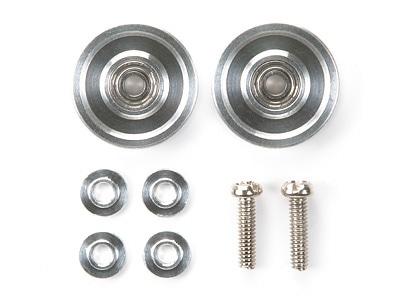
These 13mm rollers are machined from aluminum without the plastic ring used on many other Tamiya rollers, trimming weight at the cost of running the bare aluminum rim directly against the course wall. Each roller turns on a 520 ball bearing rather than a plain bushing, keeping rotation smooth and cutting drag at speed. Tamiya lists them as compatible across nearly its whole chassis lineup, from the older Type 3, Type 4, Type 5, and Zero chassis through FM, Super-1, Super-II, the Super X/XX/TZ family, MS, AR, MA, VZ, and ME chassis, so the same roller carries over even if a racer switches chassis platforms. Released in November 2018, they sit in Tamiya's "ringless" aluminum roller line, aimed at racers prioritising minimum rotating weight over the extra wall-contact durability a plastic ring provides, and are commonly run at the front of a machine where wall contact is lighter than at the rear.
Stock Class, B-MAX and Open are not the same rulebook. How official Tamiya events, Basic-MAX GP v5 and local Malaysian shop races actually differ on race day.

What scale is Mini 4WD? Learn the 1:32 format, typical car dimensions and official race measurements to check before modifying your car at the bench.

Building the best Tamiya Mini 4WD setup means matching the track, not chasing peak speed. Roller layout, braking, mass and a baseline you can repeat.