
Gel Blaster Internal Parts Explained: What Each One Does
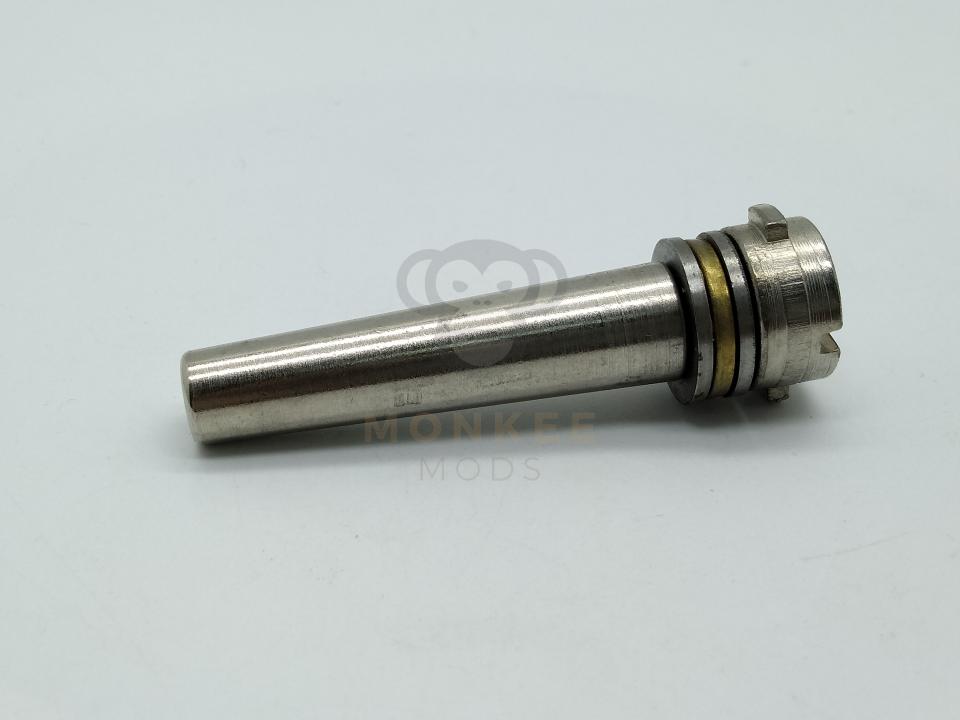
Once you pop the shell off an AEG-style gel blaster, the gel blaster internal parts inside can look like an unlabelled pile of gears and springs. They're not random — every part has one job, and most upgrades are really just a better version of one of the parts below.
The internals, part by part
| Part | Job | Common upgrade reason |
|---|---|---|
| Motor | Spins the gear train that cycles the piston | More torque or speed for a heavier spring or faster rate of fire |
| Bevel / spur / sector gears | Step down the motor's speed into piston strokes | Metal gears resist stripping under a stronger spring |
| Piston & piston head | Compresses air to push the gel ball | A better sealing head reduces air loss |
| Main spring & spring guide | Powers the piston stroke; guide keeps it seated straight | A heavier spring raises FPS within safe limits |
| Cylinder & cylinder head | Contains the compressed air, directs it to the nozzle | Matched cylinder porting for your barrel length |
| Air nozzle | Delivers the air pulse into the barrel behind the ball | A tighter seal against the hop-up unit |
| Tappet plate | Feeds a gel from the magazine into the hop-up chamber each cycle | Smoother, more consistent feeding under high rate of fire |
| Trigger contacts / switch | Completes the circuit that runs the motor | See our trigger switch guide for wear signs and MOSFET upgrades |
How they work together
The sequence on every shot is the same: the trigger closes the circuit, the motor turns the gear train, the sector gear pulls the piston back against the main spring, and — on the toothless part of the sector gear — releases it. The piston head slams forward, the cylinder head forces air through the nozzle, and that air pulse pushes the gel ball through the hop-up chamber and down the inner barrel. At the same time, the tappet plate has already fed the next gel into position. Miss a step anywhere in that chain — a worn tappet plate, a cracked piston head, loose trigger contacts — and you get one of the classic symptoms: weak shots, no feed, or a gearbox that cycles but doesn't fire.
Which parts actually limit performance
- Air seal, not raw spring weight, is usually the ceiling. A leaky piston head or a poorly seated air nozzle wastes power a heavier spring can't make back.
- Gears fail before motors do, on a stock build pushed too hard. Nylon gears strip teeth under load well before a stock motor burns out.
- The tappet plate is the most common feeding culprit. If your blaster fires but skips gels, check it before blaming the magazine.
For a full parts diagram showing where each of these sits inside the shell, see our gearbox diagram guide. Matched internals for common platforms are listed under gearbox parts.
Frequently Asked Questions
What are the main internal parts of a gel blaster?
The motor, the bevel/spur/sector gear set, the piston and piston head, the main spring and spring guide, the cylinder and cylinder head, the air nozzle, the tappet plate, and the trigger contacts. Together they turn the motor's rotation into a single burst of compressed air that launches one gel ball per trigger pull.
Which internal part fails most often?
The piston-head O-ring and seal, the piston head and the tappet plate are the usual wear items — a tappet plate that breaks repeatedly usually points to another fault, such as a failed anti-reversal latch, since both move on every single shot. A worn tappet plate causes skipped or inconsistent feeding, while a cracked or soft piston head lets air leak past instead of pushing the ball, which quietly drops your range and power.
Do I need metal internals for a stock gel blaster?
Not for stock power levels. Stock gears and plastic internals are usually matched to the stock spring. Metal gears and a reinforced piston become worth it once you upgrade to a heavier spring or push a higher rate of fire, since that's when stock nylon parts start stripping.
Why does my gel blaster fire but shoot weakly?
Weak shots with a working trigger and motor almost always point to an air-seal problem — a worn piston head, a loose cylinder head, or a poorly seated air nozzle. Check those in order before assuming the spring is worn out, since a leaking seal wastes more power than a spring loses with age.
Related reading
Start with the full guide: Gel Blaster Modding: The Complete Upgrade Roadmap.