
Nerf Motor Upgrade Guide
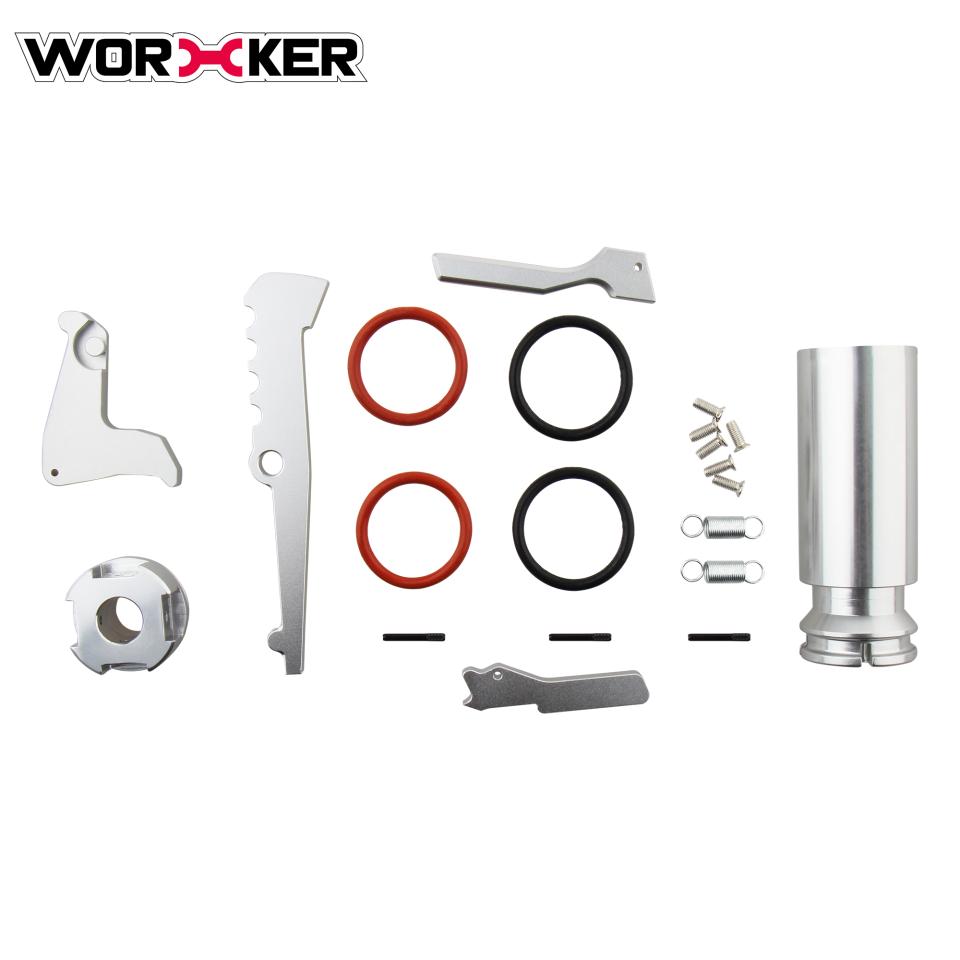
A Nerf motor upgrade changes how hard the flywheel cans work against crush and dart mass. It does not replace a cage tune, a rewire, or a pack the product names, and it does not apply to springers. The Nerf Kronos is a Rival-ball springer pistol — it has no flywheel motors — so “Kronos motors” as a shopping phrase is the wrong machine. What people remember from that aftermarket era is metal flywheel cages sold alongside Kronos springs and handles from various aftermarket makers: a historical example of matching cans to a documented cage and voltage, not a stocked SKU this guide is promising. Hasbro still says do not modify the blaster. Aftermarket cages publish which motors and packs they support. Stay inside that, or stop.
What a motor upgrade actually changes
Each flywheel motor is a small DC can pressed onto a wheel. Voltage sets how fast it wants to spin; current is what it draws while fighting the pinch. A “faster” can on a pack that sags still throws a slow dart. A high-torque can that cannot reach speed in the rev time you actually use will bog, heat, and chew foam. FPS is a chronograph reading of one dart on one crush, not an RPM on a product box. There is no motor that is “the fastest” in the hobby, and quoting a universal RPM as a target is how people overspeed cages.
Do this after darts, cage screws and crush, and after wiring that can deliver current without melting trigger contacts. A MOSFET is a low-side switch, not an FPS part. See what a MOSFET is, how to rewire, and how to tune flywheels before you buy cans. The Hare Diana lists a flywheel-with-motor as a matching service part, not a hotter upgrade.
Torque versus speed versus heat
Torque is how hard the motor can keep spinning when the dart hits the pinch. Speed is how fast the wheels are turning when the dart arrives. Heat is the leftover energy in the can and the cage when those two fight. A speed-biased can on too much crush stalls, smells, and glazes wheels. A torque-biased can on too little crush may rev hard and still slip the foam. Neither fault is fixed by “more voltage” if crush and dart length are wrong.
Rev time matters. Dumping a dart into wheels still spooling up is a slow, tumbling shot — timing, not a weak motor. Full-auto strings heat the cans. If the cage is too hot to touch after a string, you need less crush, a documented pack, or a pause — not a hotter motor.
Match the pack voltage the cage documents
| Choice | What it does | Failure if you ignore the rest |
|---|---|---|
| Speed-biased can | Wheels want high RPM for a light pinch | Bogs and heats if crush or dart mass is high |
| Torque-biased can | Holds speed when the dart hits | Wastes current and heat if the pinch is already slipping |
| Higher documented voltage | Same can tries to spin faster | Over-speed, cooked stock switch, swollen pack if the system was not built for it |
| Service motor (e.g. Diana flywheel-with-motor) | Restores a matching assembly | Treating it as a “performance” SKU |
Cell count is not a shopping code. The Diana documents 3S or 4S with an XT-30 bay; that is that pistol, not a rule for every flywheel. A 2S pack on a cage designed around a higher voltage will feel dead. A 4S pack on motors and a switch designed around 2S or 3S can over-speed the wheels and arc the trigger. Use the pack and charger the product names. Nominal LiPo is 3.7 V per cell; charge attended; storage typically 3.75–3.85 V per cell. Connector adapters do not change voltage. C-rating is discharge capability, not a power upgrade.
Springers do not get motors. The Unicorn, Seagull, Harrier, Firefly and ZWQ are air-pulse machines. If your “motor upgrade” started from a Kronos search, you likely wanted Rival-ball springs or a flywheel cage from that same aftermarket era — two different products. Kronos-era metal cages are a historical matching exercise: can, wheel, voltage, switch. They are not a promise that a 425-class cage is on the shelf today. Buy the motor the live cage listing names.
Install like it is electrical work
Disconnect the pack. Support the cage so you do not bend shafts. Press wheels concentric and fully seated — a wheel that wobbles is a grouping problem you will blame on “weak motors”. Match left and right cans if the documentation says they are a pair; mismatched motors throw the dart off axis. Do not grind a can to fit. Do not skip the MOSFET and fuse if current is going up. First test is a short rev, rated eyewear on (Z87.1 / EN 166), safe backstop, then chrono with the dart the field tests. There is no universal safe FPS; the organiser sheet wins. Stop on smell, stall, a cage that stays live, or numbers that jumped past the cap.
If range was already falling, a new motor is the wrong first step. Worn wheels, crushed foam, a loose cage and a sagging pack are in flywheel blaster losing range. Hasbro: do not modify. Hobby practice is still documented cans, documented voltage, one change at a time.
Frequently Asked Questions
Which motor is best for my Nerf blaster?
The one the exact cage and pack documentation names, with a torque/speed balance that matches your crush and dart. There is no fastest SKU. Do not pick from a generic RPM table.
Can I put Kronos motors in a flywheel?
The Kronos is a springer. It has no flywheel motors. Cages sold in that aftermarket generation are a historical example of matching cans to a cage, not a current kit this page is selling.
Will hotter motors raise FPS?
Sometimes, if crush, darts and voltage at the wheels were already right and the organiser cap allows it. Often they shred foam on a bad pinch or sag the pack. Chrono; do not assume.
Can I fit a motor myself?
Only if you can follow the cage’s service information, keep wheels concentric, and verify the complete electrical system. Otherwise use a technician.